
From Invisible to Found: My Three-Channel Strategy for a Forgotten Shop
I built a poster shop six months ago. It’s global, it runs on Shopify, and it had exactly zero customers. Not because the posters weren’t good. Not because the shop wasn’t set up properly. It just didn’t exist where people could find it.
I was too busy running Search Everywhere Systems and working with other clients. Imposter Art sat on the shelf.
But here’s the thing: I teach people how to get found. So treating my own invisible business like a client made sense. This is the strategy I’m using to rebuild it from zero visibility to actual sales. And it’s exactly what I’d do for anyone.
The Problem With Forgotten Businesses
When you build something and then leave it, visibility doesn’t maintain itself. Google doesn’t keep ranking you. Platforms don’t keep showing you. People don’t randomly discover you.
What happens instead is silence.
Imposter Art had all the foundations in place. The shop worked. The products were there. But no one knew it existed. There was no fresh content. No visibility signals. No reason for anyone to find it.
This is the problem I see with a lot of product businesses. They get built, launched, and then the owner gets pulled into other work. The visibility strategy either never existed, or it stalled.
This had stalled.
Why Three Channels, Not Everything
The temptation when you’re rebuilding is to do everything. Pinterest, Instagram, TikTok, email, Reddit, Google ads, the lot. Throw enough at the wall and something sticks, right?
Except it doesn’t. What actually sticks is focus.
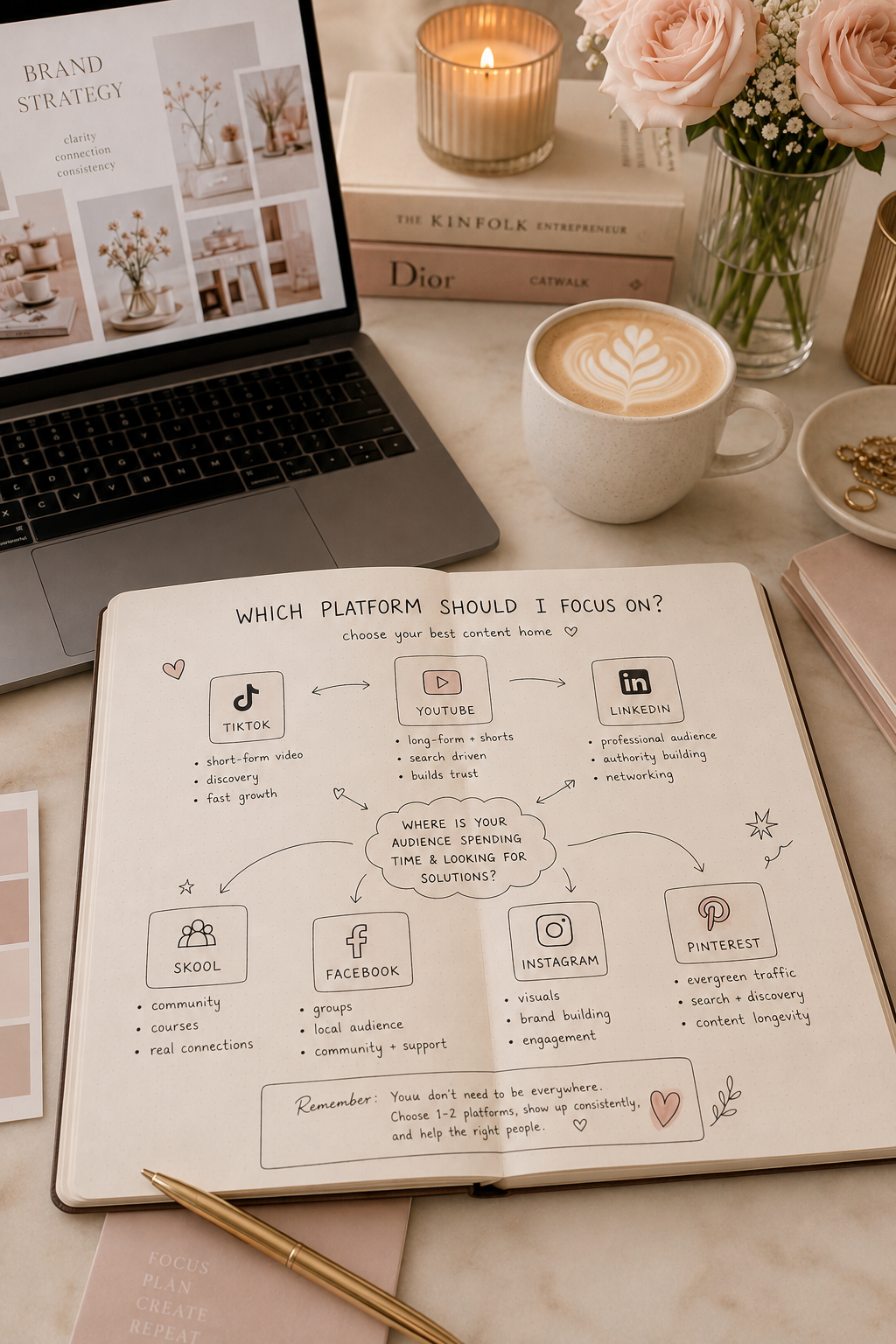
I’m rebuilding Imposter Art on three channels: a blog, Pinterest, and TikTok. That’s it. Not because those are the only channels that matter. But because those three work together as a system, and I can actually execute them properly without drowning.
Here’s why I picked these three.
Blog for SEO and AI Discovery
A blog does two jobs simultaneously. It gives Google fresh, structured content to index. And it gives AI systems like ChatGPT and Perplexity something to cite.
I’m not writing about posters in a generic sense. I’m documenting the process. What I’m designing, why, how I’m thinking about it. Behind-the-scenes content that people actually want to read, and that search systems actually want to pull from.
This is where the system starts. The blog is the foundation.
Pinterest for Visual Discovery and Traffic
Pinterest isn’t Instagram. People don’t go there to follow you. They go there looking for inspiration, ideas, aesthetics. If I make a poster that solves a visual problem—a specific mood, a design style, something someone’s searching for—Pinterest is where they’ll find it.
Each blog post becomes a Pinterest pin. The pin links back to the shop. Pinterest drives traffic. Simple system.
TikTok for Reach and Presence
TikTok is where people discover things they didn’t know they were looking for. I’m using it for process videos. Making posters. Showing the work. Not hard selling. Just being visible.
TikTok won’t drive direct sales like Pinterest will. But it builds awareness. It creates presence. And the algorithm actually shows your content to people if it’s good, regardless of whether they follow you.
Those three channels working together are enough. More than enough, actually. Anything else is noise.
What I’m Actually Doing
This isn’t theoretical. I’m doing this right now.
Week one looks like this: I’m writing a blog post about a design I’ve just finished. Why I made it. What problem it solves visually. That post goes on the Search Everywhere Systems blog and the Imposter Art blog.
From that post, I’m creating a Pinterest pin. The pin links directly to the product page.
Then I’m filming a TikTok showing the design process. Quick, behind-the-scenes. Maybe 30 to 60 seconds.
That’s one cycle. One piece of content. Three platforms. One system.
I’ll repeat this weekly. One blog post. One pin. One video. Consistent. Focused. Actually manageable.
Why This Matters for Discovery
The old way of thinking about visibility was: get traffic, get sales. More traffic, more sales.
That’s breaking down. Because of zero-click searches and AI Overviews, you can get visibility without website traffic. And because of how platforms actually work, you can get found without being everywhere.
What matters is being systematic. Understanding how each platform’s discovery system works. Making content that fits those systems. And being consistent enough that the system compounds.
That’s what I’m doing with Imposter Art. Not spending money on ads. Not hiring someone to manage social. Just understanding the system and executing it properly.
And documenting it so you can see how it actually works.
If You Want to Do This for Your Business
This is exactly what I help people with. Taking a business that’s invisible or struggling with visibility, and rebuilding it using a focused, systematic approach.
Whether you’re selling products, services, or expertise, the principle is the same. Focus on the channels where your specific audience actually discovers things. Understand how those platforms work. Build a system you can actually maintain.
Then execute.
If you want to talk through what this looks like for your business, You can book a call where we can map out your specific situation. No obligation. Just a chat on where your business is at.
Or check your company’s visibility by answering these simple questions.
Or you can have a full audit of your website to see exactly where you’re at.
I’m also documenting the Imposter Art rebuild as it happens, so if you want to see how this plays out in real time, you’ll see it unfold.