How to Choose the Right Marketing Platforms for Your Small Business Growth
You open Instagram to post something for your business. Before you have finished, you remember you have not used LinkedIn all week. Your Pinterest account needs attention. Someone said you should be on TikTok. Your blog has not been updated for a month.
Meanwhile, the actual work still needs doing.
This is where a lot of small businesses get stuck. You are told to be everywhere, so you spread your time across six platforms and never stay on one long enough to understand whether it is working.
You do not need more platforms. You need a clearer reason for using the ones you choose.
Do You Actually Know Where Your Customers Go When They Have a Problem?
The right platform is not necessarily the one with the most users. It is the one your customer reaches for when they have the problem you solve.
Someone looking for an emergency plumber behaves differently from someone planning a kitchen renovation. A marketing director looking for a consultant searches differently from someone choosing artwork for a new flat.
That is the useful question. Not, “Which platform is popular?” but, “Where does my customer go when they are ready to look for this?”
Once you know that, the list becomes much shorter.
If Your Business Is Local, Why Are You Prioritising Social Media Over Google?
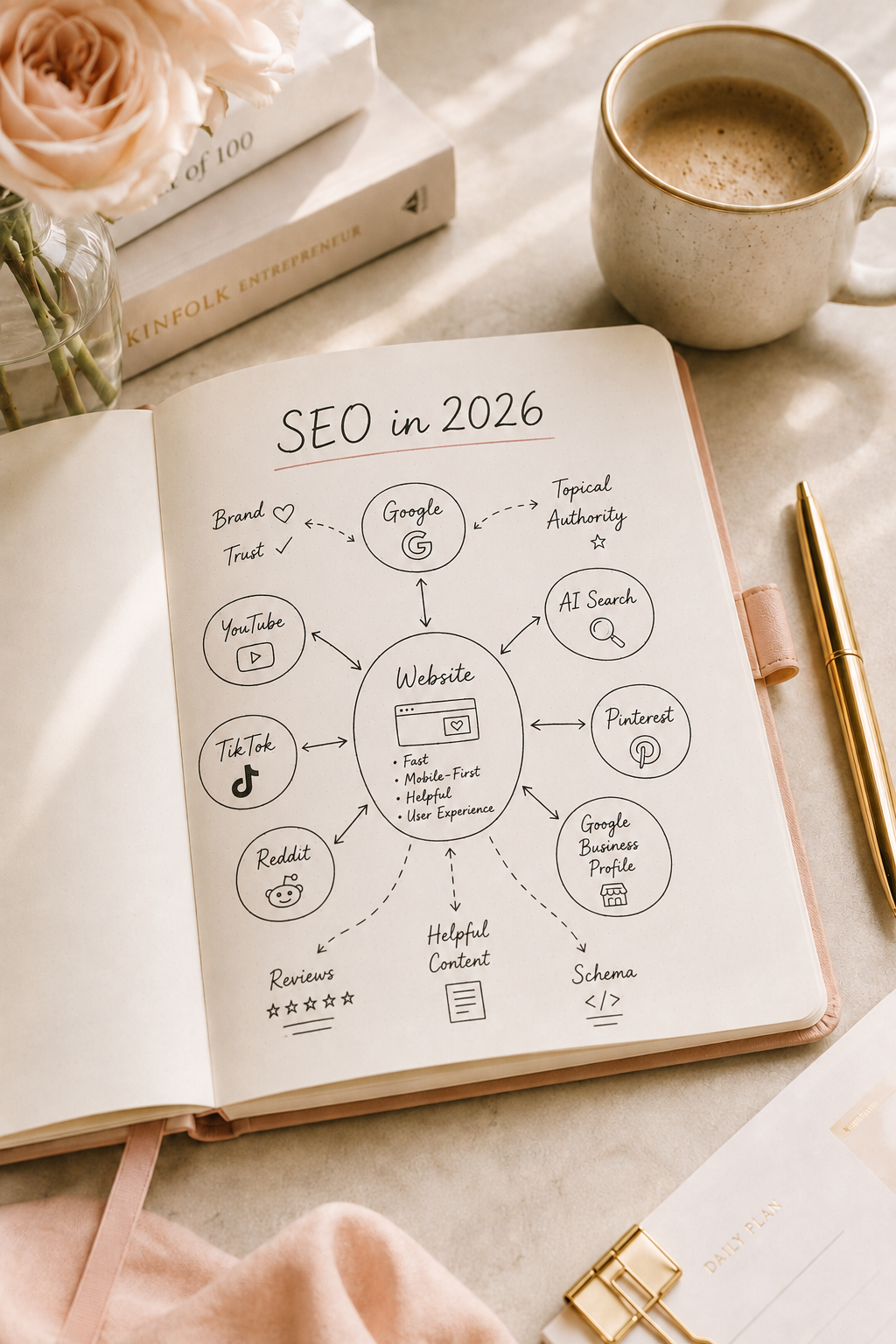
If you work in a defined area, your website and Google Business Profile should usually come before social media.
People do not tend to open TikTok when they need a locksmith in Hackney or an accountant near their office. They search Google, look at the map results, compare reviews and visit a couple of websites.
Your Google Business Profile helps you appear for local searches. Your website gives people enough information to decide whether you are credible. The two work together.
This suits trades, clinics, salons, restaurants and local professional services. It also suits businesses where trust, location and availability matter more than entertainment.
Social media can support that foundation. It should not distract you from building it.
Does Your Product Need to Be Seen to Be Sold?
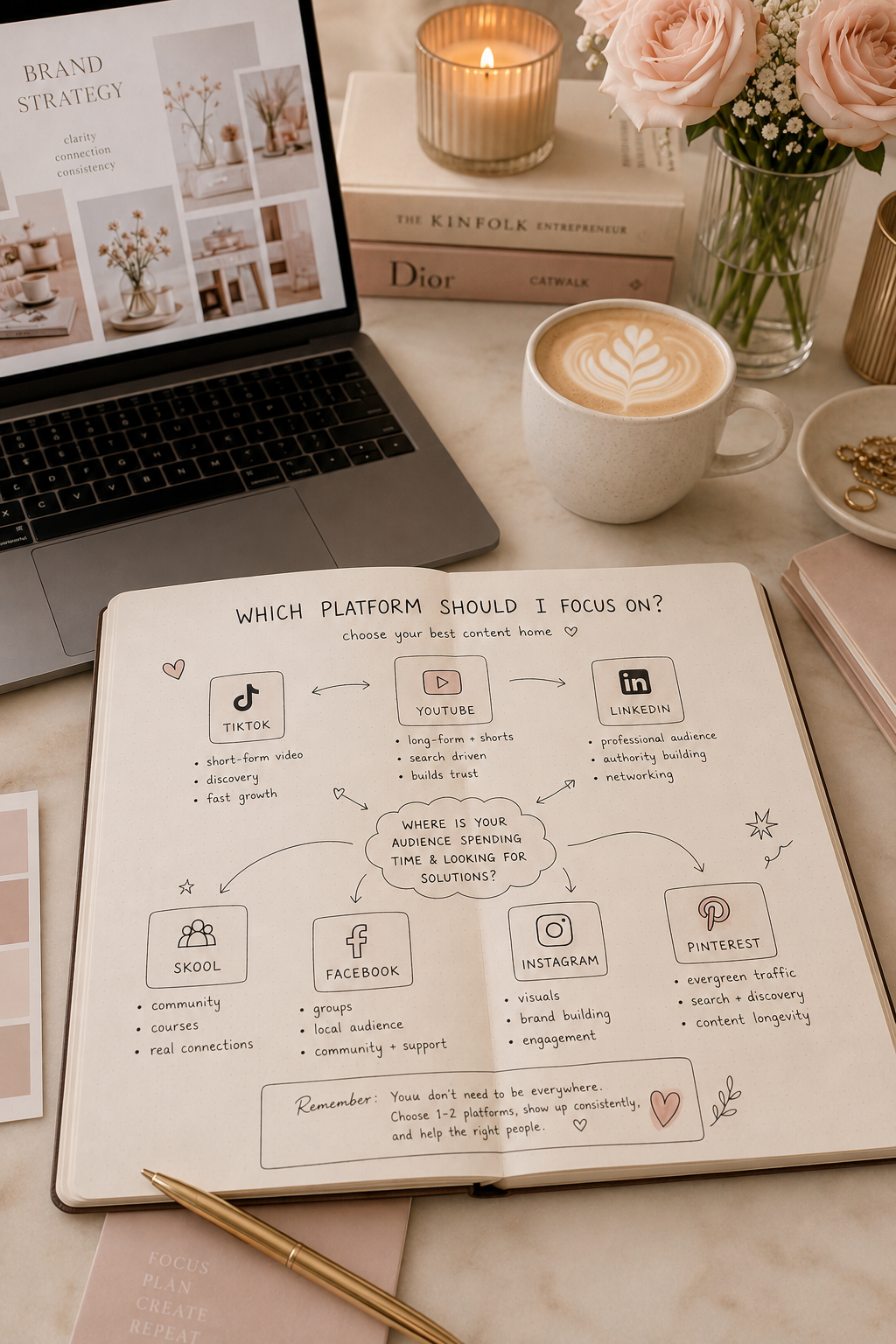
Pinterest and Instagram both suit visual businesses, but they do different jobs.
Instagram is useful when people want to see what is happening now. It can show recent work, the people behind the business and the day-to-day personality of a brand. It is particularly helpful when familiarity and social proof influence the decision.
Pinterest is stronger when people are planning. They search for ideas, save options and return to them later. This makes it useful for interiors, weddings, fashion, food, travel, design and products connected to a future project or purchase.
Pinterest reported in 2026 that 96% of its top search results were unbranded. That matters for a smaller business. Someone does not have to know your name before your work can appear in front of them.
If you sell something visual and evergreen, Pinterest may give your content a longer useful life. If the relationship and the person behind the business matter more, Instagram may be the better starting point.
You may eventually use both. You do not have to build both at once.
Are You Struggling to Sell a Service That Feels Too Complicated to Your Audience?
Some services need explaining. The customer has questions, the price is meaningful, or the work feels complicated from the outside.
This is where a blog or YouTube earns its place.
A useful blog post can answer a detailed question in a format Google and AI search tools can understand. It gives you a page you own, can update and can link to whenever the same question comes up again.
YouTube does the same job when the explanation is easier to show. Demonstrations, walkthroughs, comparisons and practical advice help someone understand both the subject and the person teaching it.
You do not need a studio. You do need a subject worth explaining and a format you can continue producing without resenting it.
Choose writing if you think clearly on the page. Choose video if showing the work makes the answer easier.
If You Sell to Other Businesses, Look at LinkedIn
LinkedIn makes sense when the person buying is there in a professional capacity.
Consultants, coaches, recruiters, agencies and specialist service providers can use it to explain their thinking, take part in industry conversations and become familiar to the people who may eventually hire them.
It is less useful when the purchase is highly visual, inexpensive or driven by personal taste. A ceramicist can technically post on LinkedIn. That does not mean the buyers are waiting there.
Again, the customer’s behaviour makes the decision.
Are TikTok, Facebook, and Reddit a Genuine Growth Strategy or Just a Distraction?
These platforms can be useful, but they should not automatically become the centre of your plan.
TikTok suits businesses that can explain, demonstrate or entertain through short video. It can create discovery beyond your existing audience, but it asks for a steady supply of ideas and a willingness to learn what holds attention.
Facebook still matters in local groups and communities where people actively ask for recommendations. A useful presence in the right group may do more for a local service than months of posting to a quiet business page.
Reddit is different again. People go there for candid answers and detailed discussions. It can help you understand the questions customers ask and, when appropriate, contribute something genuinely useful.
It is not a place to arrive with a promotional link and a cheerful sales pitch. That tends to go about as well as you would expect.
Threads and Lemon8 may suit particular creators, but I would not make either a primary recommendation for most small businesses. Their role is less clear, their content is more immediate, and your time is usually better spent strengthening a platform with established customer intent.
Are You Mistaking Your Skool or Circle Community for a Marketing Funnel?
Skool, Circle and similar platforms are useful once people already know why they want to join you.
They help organise training, conversations and member resources. They can improve retention and give your audience somewhere quieter to learn.
They do not usually solve the first problem, which is being discovered. You still need a route that brings new people in. That might be Google, YouTube, LinkedIn, Pinterest or another public channel.
Think of the community as the room people enter after they have found the front door.
Are You Spreading Your Content Too Thin Before Mastering a Single Channel?
The simplest workable system has one main discovery platform, one destination you own and one clear next step.
Your discovery platform might be Google, Pinterest, LinkedIn or YouTube. Your owned destination is usually your website or email list. The next step might be booking a call, requesting a quote, visiting a shop or joining a community.
Once that route works, you can repurpose the core idea elsewhere. A blog post can become several Pinterest Pins, a short video, a Google Business Profile update and an email.
Scheduling software can help with distribution, but it cannot decide what your customer needs to hear.
Start with the thinking. Automate the repetitive part later.
You do not need to become omnipresent. You need to be easy to find in the places that matter, with a useful route from discovery to action.
If you want to talk through which platforms fit your business, I can map the search journey with you and show you where your effort is most likely to count.